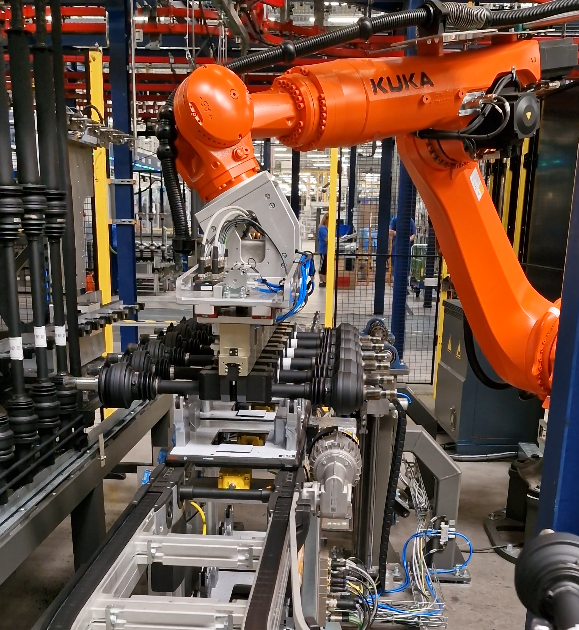
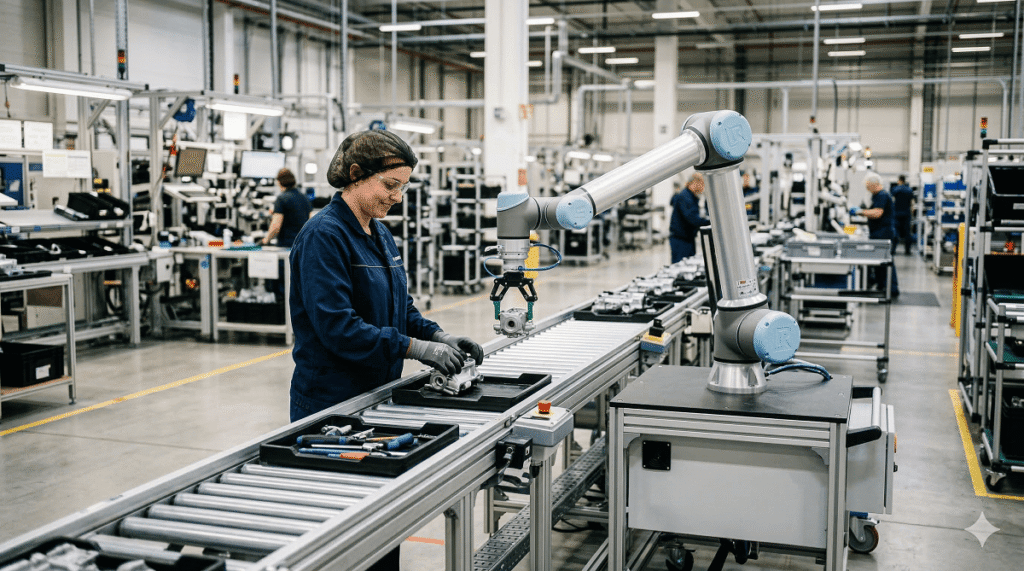
A Programmable Logic Controller (PLC) is the heart of modern manufacturing and industrial processes, a key element of any advanced automation and automatization. But do you know exactly what this advanced system consists of? Learn about the construction elements of a PLC controller and their purpose.
Understanding the construction
Understanding the construction of a PLC controller is the foundation for anyone who wants to effectively manage control systems and diagnose their operation. PLC controllers have evolved from simple relay devices into advanced industrial computers. This evolution has allowed for increased capabilities, flexibility, and reliability of machines and equipment in production plants.
Basic components of a PLC controller:
Central Processing Unit (CPU)
The central processing unit (CPU) is the brain of every PLC controller. It is responsible for processing instructions from the user program and performing complex logical operations. The key components of the CPU are the processor, computer memory, and communication circuits. This is where the algorithm controlling the entire process is executed.
The processor, often a microprocessor, is responsible for the fast execution of the program code. Computer memory, including RAM and read-only memory (ROM), stores operating data and the controller’s operating system. The integration of these elements allows for the efficient management of the entire system.
Digital Input Modules
These modules are used to receive two-state (binary) signals, which take only two values: “0” (no voltage) or “1” (presence of voltage). They are used to operate buttons, limit switches, and proximity sensors. A key element of these modules is galvanic isolation, which protects the delicate electronics of the processor against overvoltages from the industrial installation.
Analog Input Modules
In contrast to digital modules, analog inputs allow for the reading of continuous values, such as temperature, pressure, or flow. They use a built-in analog-to-digital converter (ADC), which converts electrical signals (standard 0-10V or 4-20mA) into numbers understood by the processor. Thanks to them, the PLC controller can precisely monitor the physical parameters of the process.
Digital Output Modules
Digital output modules execute control commands in the on/off system. They usually come in two variants: transistor (for fast operations and small DC loads) and relay (allowing for the control of higher currents and AC voltage). They are used to activate contactors, solenoid valves, and light indicators.
Analog Output Modules
These modules are used to control devices requiring smooth regulation. Thanks to the digital-to-analog converter (DAC), the controller generates a current or voltage signal that allows for setting the rotational speed in inverters or controlling the opening degree of control valves. This is essential in advanced PID control systems.
Power Supply Module in a PLC controller
The power supply module is an essential element of every PLC controller. It is responsible for converting the mains voltage into the stable voltages required by the central unit and other modules. In critical applications, power supply redundancy is used to ensure the continuity of system operation.
Communication Modules
Communication modules constitute the “window to the world” for the PLC controller. They allow for data exchange in standards such as Ethernet, PROFINET, Modbus, or RS-485, which enables cooperation with HMI panels, process devices, or SCADA systems.
PLC construction – compact vs. modular
We distinguish between two main types of PLC construction: compact and modular. Compact controllers integrate all necessary components in a single housing, which is an ideal solution for simpler applications. Modular controllers offer greater configuration flexibility, allowing for the selection of individual modules for specific system needs.
In modular controllers, specialized modules can also be added, such as high-speed counters (HSC), PID controllers, temperature modules, or axis positioning modules.
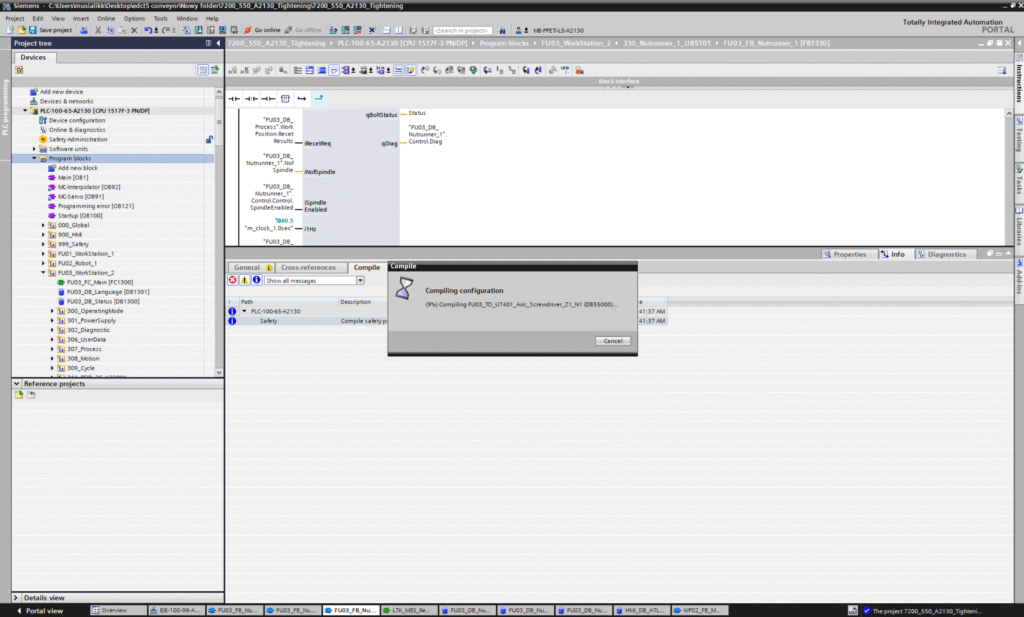
Programming PLC controllers – the basis of system operation
The foundation of efficient automation is professional PLC programming. It is in the user program, created in accordance with the international IEC 61131-3 standard, that the entire control logic is stored. Using languages such as LAD (ladder), FBD (block), or SCL (structured text), the programmer defines how the central unit is to interpret signals from inputs and what commands to send to outputs. Appropriately optimized code directly translates into cycle speed, machine safety, and the reliability of the entire production process.
Summary
In summary, what does a PLC controller consist of? Of key components such as the central processing unit, input and output modules, a power supply module, and communication modules. Their synergistic cooperation enables advanced automation of production processes. Understanding this construction is important for the effective selection and implementation of controllers in every machine.
Basic components of a PLC controller
- Central Processing Unit (CPU): The heart of the controller, it processes data from memory, executes user programs, and manages communication. It often contains an 8- or 16-bit microprocessor.
- Digital and analog inputs: Receive binary signals (0/1) from sensors or continuous signals from measuring devices.
- Digital and analog outputs: Control actuators, e.g., motors or valves.
- Power supply module: Converts AC current (230V in Europe) to DC (most often 24V). It can be integrated or separate.
- Memory: ROM/Flash for the operating system, RAM for programs and data.
- Communication modules: Enable connection with an industrial network, PC, or remote I/O modules.
FAQ – Frequently Asked Questions
What are the basic components of a PLC controller?
The basic components of a PLC controller are: the central processing unit (CPU), digital and analog input modules, digital and analog output modules, the power supply module, and communication modules. Their synergistic cooperation enables advanced automation of production processes.
What is the central processing unit (CPU) of a PLC controller?
The central processing unit (CPU) is the brain of every PLC controller, responsible for processing instructions from the user program and performing complex logical operations. The key components of the CPU are the processor, computer memory, and communication circuits, where the control algorithm is executed.
What are digital and analog input modules used for?
Digital input modules are used to receive two-state (binary) signals from buttons, limit switches, and proximity sensors. Analog input modules allow for reading continuous values, such as temperature or pressure, using an analog-to-digital converter (ADC).
What function do digital and analog output modules perform?
Digital output modules execute control commands in an on/off system, used to activate contactors, solenoid valves, or indicators. Analog output modules are used to control devices requiring smooth regulation, generating a current or voltage signal, e.g., for inverters or control valves.
What is the role of the power supply module in a PLC controller?
The power supply module is an essential element of every PLC controller. It is responsible for converting the mains voltage into the stable voltages required by the central unit and other modules. In critical applications, power supply redundancy is used to ensure the continuity of system operation.
What are communication modules in a PLC used for?
Communication modules constitute a “window to the world” for the PLC controller, enabling data exchange. They allow for cooperation with HMI panels, process devices, or SCADA systems, using standards such as Ethernet, PROFINET, or Modbus.
What are the main types of PLC controller construction?
We distinguish between two main types of PLC controller construction: compact and modular. Compact controllers integrate all necessary components in a single housing, while modular controllers offer greater configuration flexibility, allowing for the selection of individual modules for specific system needs.