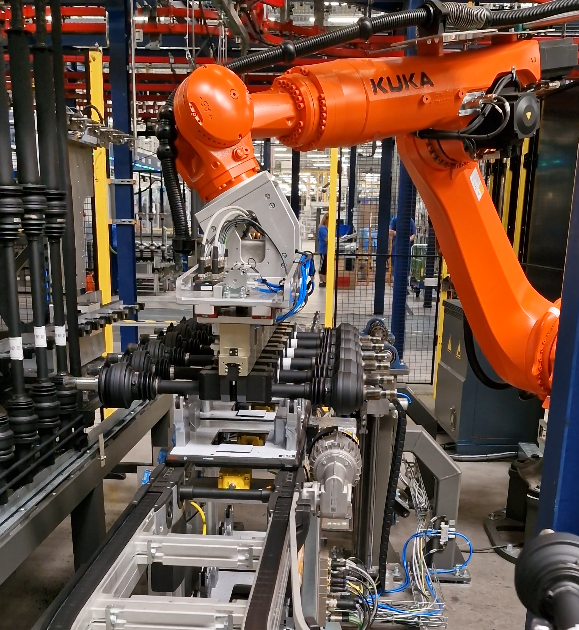
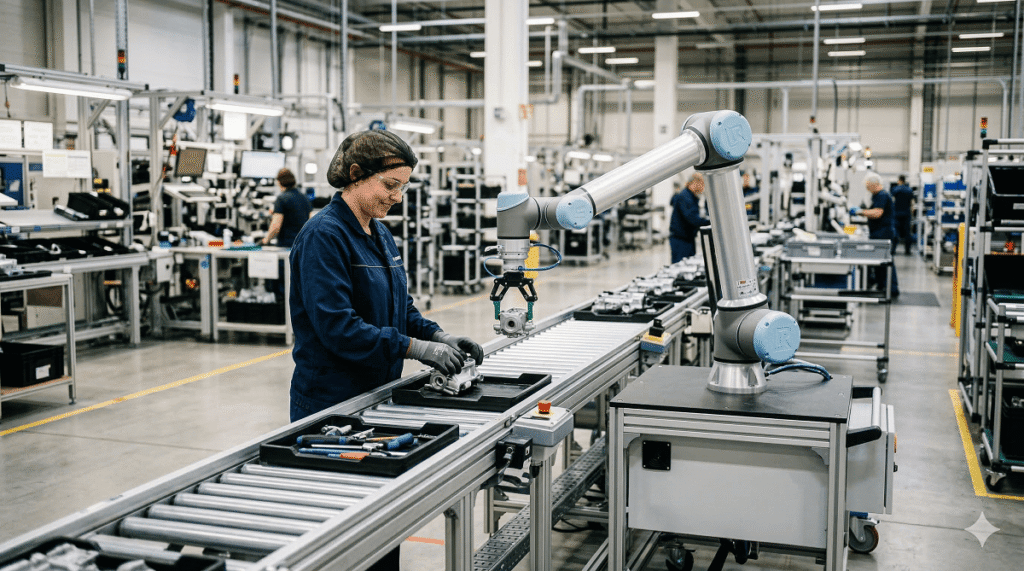
PLC controllers are the rugged backbone of modern factories. They are almost indestructible, operate in real time, and can run without failure for decades. On the other hand: they can be expensive, their programming can be archaic, and manufacturers’ closed ecosystems can effectively tie integrators’ hands. Let’s look at the pros and cons of PLC controllers.
What are PLC controllers and what role do they play in a factory?
Programmable Logic Controller PLC is a specialized industrial microcomputer designed to control the operation of machines and technological equipment in real time. This device was designed to operate reliably in harsh production environments characterized by heavy dust, a wide temperature range, and electromagnetic interference.
In a typical application the controller continuously executes a defined work cycle. In this process it receives signals from measuring equipment, such as a temperature sensor or a limit switch, and then processes this data according to the algorithm stored in memory and sends control signals to outputs associated with actuating elements, which include, among others, motors, solenoid valves or pneumatic actuators. The introduction of this technology made it possible to eliminate from factories the complex and failure-prone relay-contactor cabinets, which fundamentally changed the way modern industrial automation is designed. We describe the physical structure of these devices in a separate article.
What are the advantages of PLC controllers?
The implementation of PLC technology constitutes the foundation of modern control systems for production processes due to a range of measurable operational benefits. These devices guarantee the optimization of machine operating costs by integrating multiple control functions within a single hardware platform. Key factors determining their widespread application include high configuration flexibility, mechanical robustness, and standardized data exchange protocols.
Flexibility of configuration and ease of software modification
The main advantage that a programmable controller has over traditional systems based on hardwired relay logic is the ability to freely reconfigure the system’s mode of operation without the need for physical intervention in the wiring of the control cabinet. Changing the sequence of machine movements or modifying timing parameters is carried out exclusively by editing the software code in a dedicated engineering environment. Moreover, a modern controller allows remote uploading of programming fixes, which significantly reduces technological downtime and enables flexible adaptation of the production line to new products.
High reliability and resistance to harsh environmental conditions
The physical construction that distinguishes a modern PLC has been optimized for maximum reliability. These devices have fanless cooling systems and are completely free of moving mechanical parts, which eliminates the risk of damage caused by machine vibrations. Enclosures that provide resistance to operating temperatures ranging from 0°C to often above 60°C and air humidity of up to 95% are standard. Additionally, built-in galvanic isolation protects the inputs and outputs from overvoltages, safeguarding the primary technological process from uncontrolled stoppage.
Advanced diagnostics and integration with SCADA systems
Design of automation systems Systems based on programmable PLC controllers facilitate rapid fault identification, which directly translates into a reduction of the MTTR (Mean Time To Repair) indicator. LEDs mounted on the enclosure indicate the status of each input and output, and the CPU’s internal registers precisely log system and execution error codes. Modern controllers are equipped with interfaces and communication modules supporting industrial data transmission standards such as PROFINET or MODBUS. This allows full integration with higher-level SCADA visualization systems and MES production management systems, enabling continuous monitoring of machine operating parameters in real time.
What are the disadvantages of PLC controllers?
Although the advantages of PLC controllers dominate engineering discussions, these devices also have specific drawbacks that should be taken into account when calculating the total cost of ownership of a system. The most significant barriers include high capital expenditures, licensing restrictions, and issues related to human resources.
High initial implementation cost (CAPEX)
Investment in an advanced control system based on PLC technology involves significant initial costs. The cost of purchasing a central unit from a reputable manufacturer, dedicated analog input and output modules, and specialized engineering software can be many times higher than the budget for alternative solutions such as single-board microcontrollers or embedded systems. For smaller companies, expenditures on developer licenses and actuating components constitute a significant entry barrier to the automation process.
Dependence on qualified personnel and closed programming environments
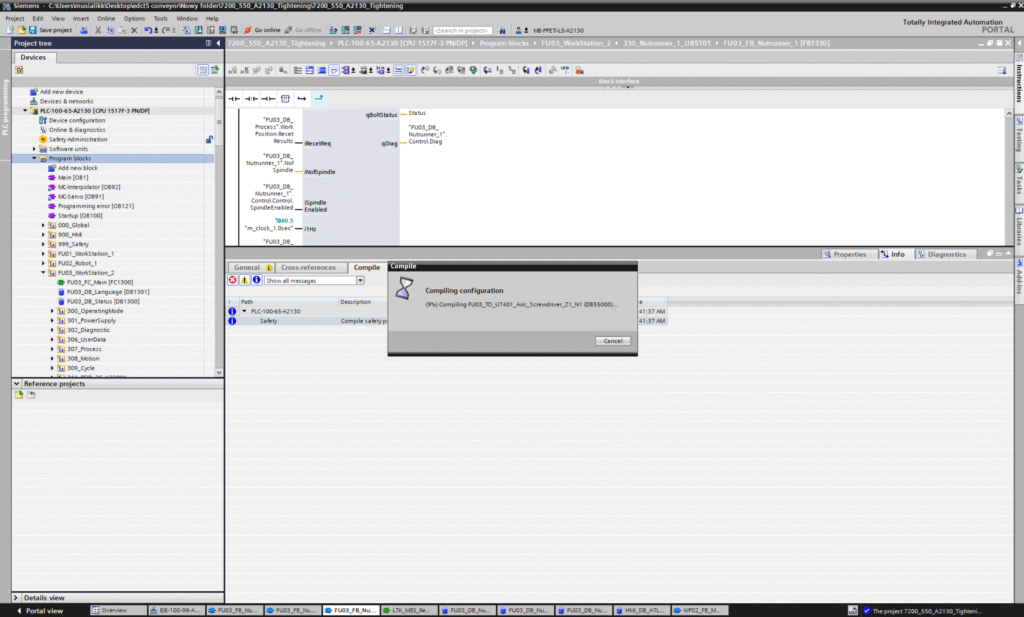
In the industrial automation market there is no single, fully universal programming standard, and leading manufacturers promote their own closed engineering ecosystems, such as TIA Portal or EcoStruxure. As a result, a company operating machines of different brands is forced to maintain licenses for many different software packages. This situation also creates the need to employ highly qualified automation engineers or to use external integrators’ services, which increases the operational costs of ongoing maintenance and modernization of production lines.
Threats related to cybersecurity
Contemporary PLC controllers increasingly operate in network structures connected to the factory internet as part of the Industrial Internet of Things (IIoT) concept. Opening controllers to external communication carries the risk of cyberattacks aimed at taking control of the production process or damaging physical infrastructure, a historical example of which was the Stuxnet malware. Securing such systems requires implementing advanced network firewalls and network segmentation, which involves additional financial and organizational costs.
What is the most popular PLC controller and the availability of market support?
The most popular PLCs on the European market, including in Poland, are Siemens devices from the SIMATIC family, particularly the S7-1200 and S7-1500 series. The dominance of this manufacturer means that they constitute an unwritten market standard around which the entire ecosystem of engineering services is built.
The choice of such a popular solution brings significant operational benefits. The availability of spare parts from distributors is immediate, and finding a qualified programmer or integrator familiar with this environment does not pose a problem for the maintenance department. In the case of our projects, Siemens PLC programming we carry out in over 90% of cases.
On the other hand, a drawback of choosing Siemens-brand devices is the high costs of engineering software licenses and the relatively high price of the hardware components themselves compared to less popular competitors.